By Jennifer Zhang
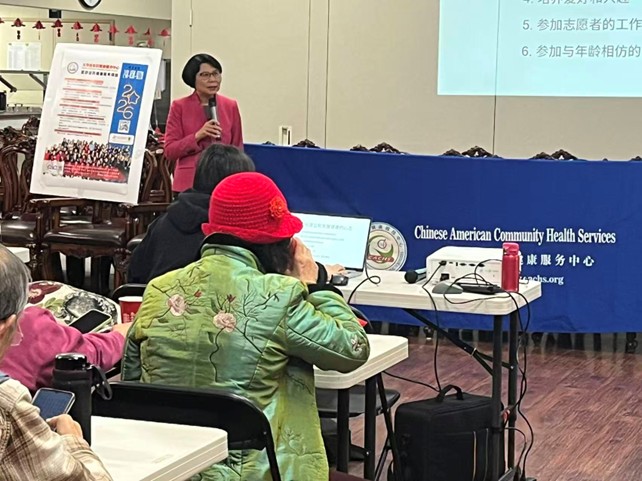
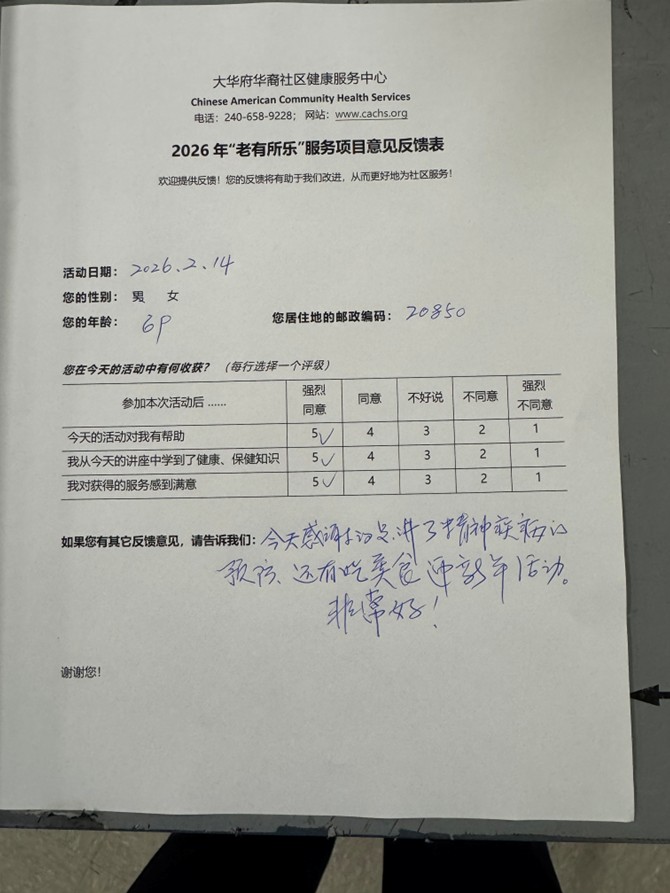
On February 14, as the Chinese New Year approached, our “Happy Seniors” program welcomed a special guest, Dr. Shao Xiaoping, a psychiatrist, to join us in this week. Dr. Shao delivered a lecture titled “Mental Health and Disease Prevention in Older Adults,” a topic that has drawn increasing attention among seniors.
Dr. Shao began by posing two thought-provoking questions: How can older adults live happily and gracefully? And do people prefer to live a life with quality or without it? She then introduced the World Health Organization’s framework for measuring quality of life in older age—five interconnected domains collectively known as intrinsic capacity: cognition, locomotion, sensory function, vitality, and psychological well-being.
From these five perspectives, Dr. Shao provided practical strategies to help seniors enhance and maintain their intrinsic capacity, with particular emphasis on psychological well-being. To strengthen cognition, she encouraged reading, critical thinking, memory exercises, and practicing Tai Chi. For locomotion, she recommended regular and appropriate physical exercise. To protect sensory function, she emphasized eye and hearing care, including wearing glasses and using hearing aids when needed. To improve vitality, she discussed maintaining a balanced diet with adequate nutrition, particularly sufficient protein intake (1–1.2 grams per kilogram of body weight per day).
As is widely recognized, many Chinese American seniors pay close attention to their physical health, yet often overlook the importance of mental well-being. Dr. Shao therefore elaborated on effective ways to promote psychological health, including strengthening social connections, actively using modern products and technology in daily life, embracing principles of positive psychology, engaging in meaningful activities, and enhancing brain function. She urged seniors to resist ageism and not allow age to define their inner world. She also emphasized the many benefits of a positive mindset: greater resilience to stress, reduced depression and anxiety, lower blood pressure, decreased risk of cardiovascular disease, better weight management, and improved blood sugar control. Only by cultivating and sustaining a healthy mindset, she concluded, can seniors embrace life with confidence and enjoy a graceful, fulfilling, and high-quality later life.
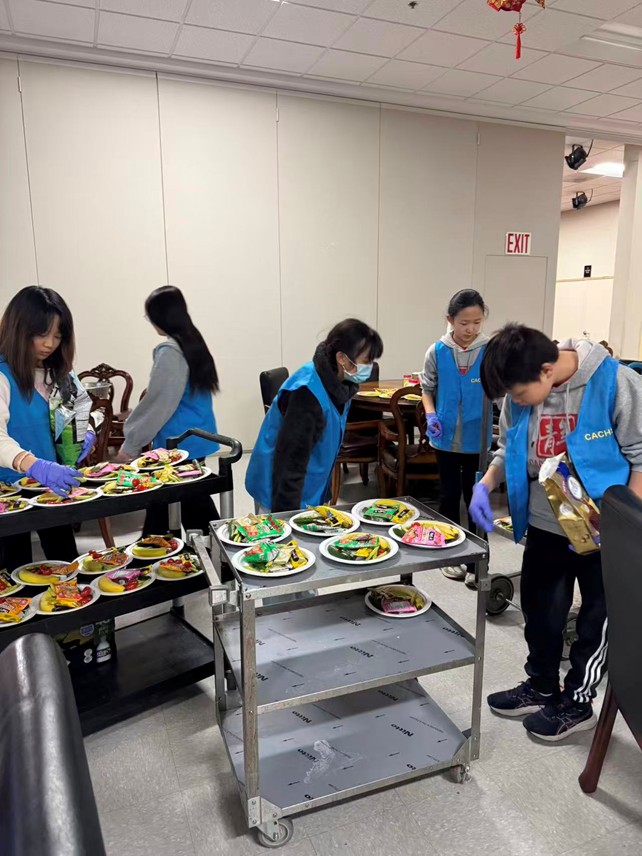
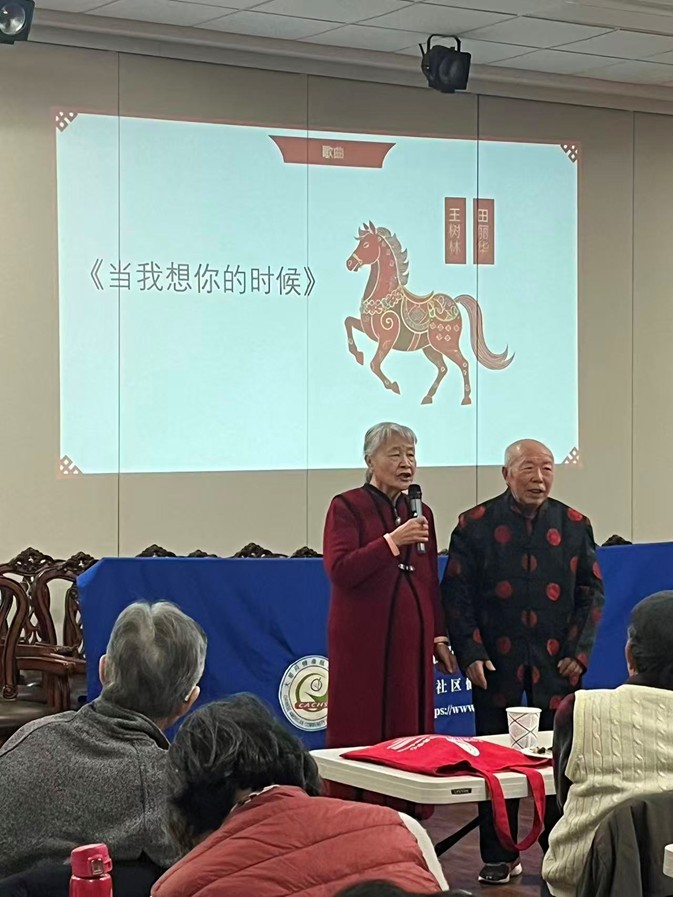
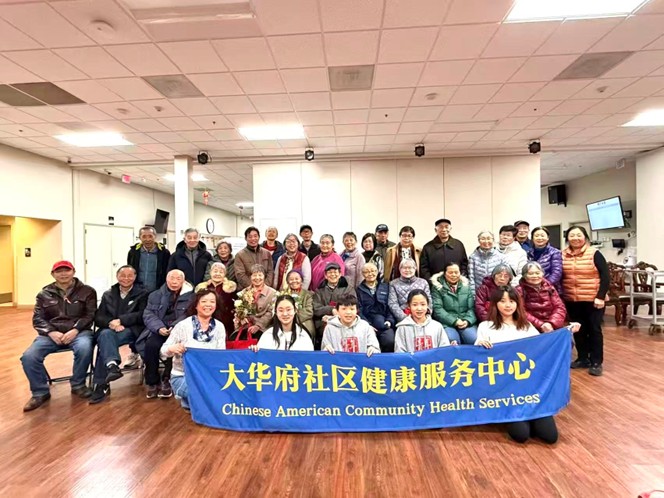
Following the lecture, we held our annual “Happy Seniors” Chinese New Year Gala. Volunteers from the Chinese American Community Health Services (CACHS) carefully organized the celebration, offering early New Year greetings and joyfully welcoming the Year of the Horse. They prepared festive snacks, bright red program booklets, raffles, flowers, chocolates, and other prizes.
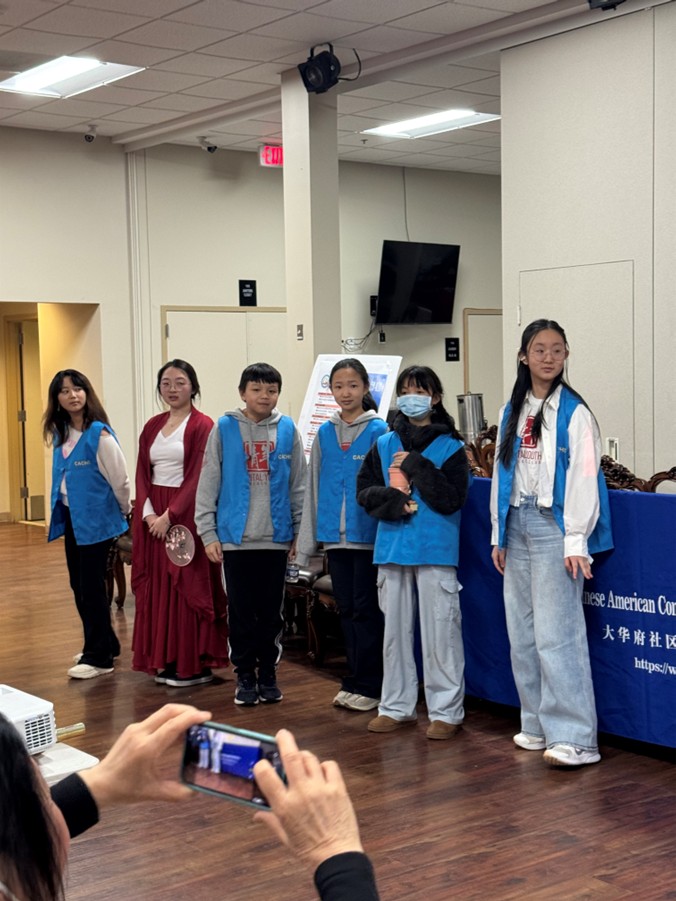
Although the event lasted only an hour and a half, the program flowed smoothly with singing, dancing, piano performances, riddles, and poetry recitations. Laughter and applause filled the room, and the raffle drawings brought the celebration to several exciting peaks. Most touching of all were the seniors themselves. They eagerly signed up to perform, carefully prepared their acts, and shone on stage with confidence and charm. The talented young volunteers from Capital Youth Outreach Club (CYOC) were especially commendable; their vibrant performances added brilliance to the gala.
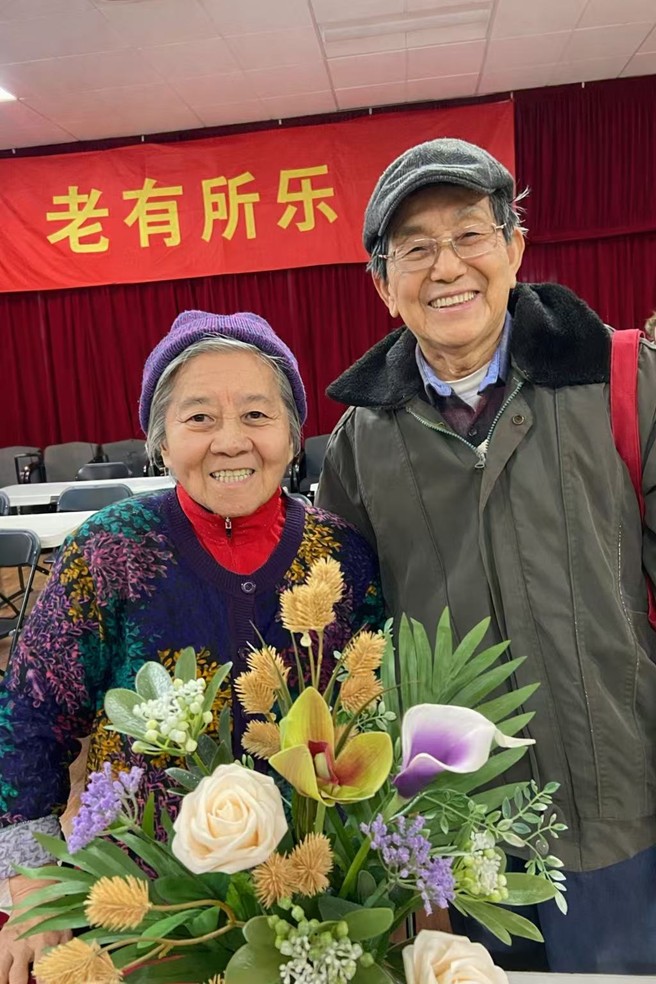
The heartfelt smiles of the seniors and the innocent, joyful faces of the children created a deeply moving scene. Nothing embodies the spirit of “Happy Seniors” better than young and old celebrating together.
admin