“2026 Seniors’ Joy Program (Phase 1)” — Eighth Activity Brief
-
by
admin
By Jennifer Zhang
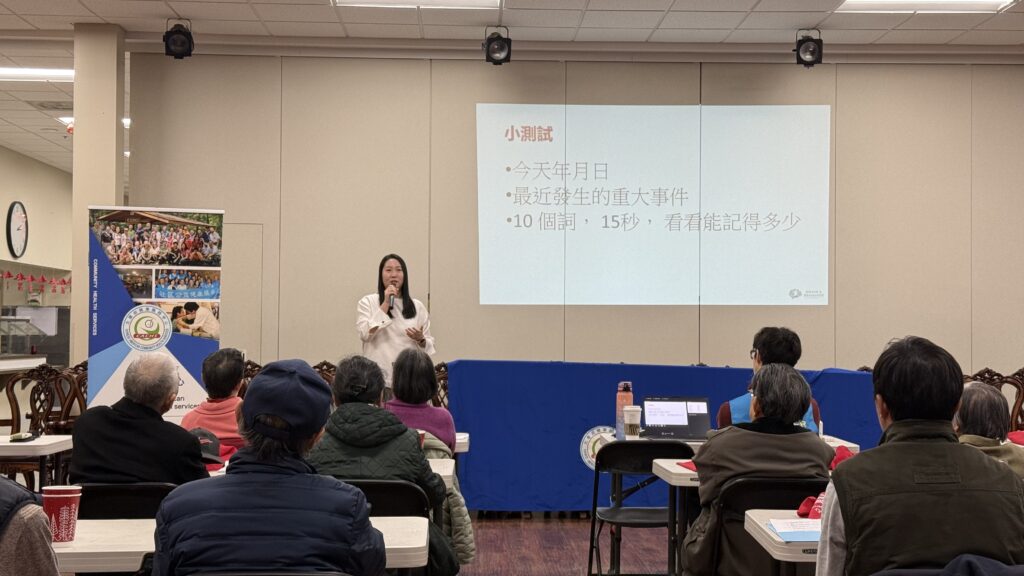
March 7 was a warm Saturday afternoon, and many seniors arrived early at the senior center to participate in this week’s “Happy Seniors” program. For this session, we invited Dr. Sisi Han, a neuropsychology specialist, to speak with the seniors about “Symptoms and Care of Dementia.”
At the beginning of her talk, Dr. Han posed two familiar questions to the audience: Have you ever walked into the kitchen and suddenly forgotten what you were about to do? Or found yourself unable to locate your keys or glasses no matter how hard you searched? When such situations happen, many people instinctively wonder, “Am I developing dementia?” So is it simply a natural decline in memory with age, or could it actually be a symptom of dementia?
Through several clinical examples, Dr. Han reassured the audience that age-related memory decline does not necessarily mean a person has dementia.
Dr. Han explained that dementia has many symptoms, and memory loss is only one of them. Other symptoms may include reduced problem-solving ability, confusion about time or place, decline in physical functioning, changes in thinking and perception, impaired judgment and decision-making, behavioral changes, and mood fluctuations. There are also different types of dementia. The most common is Alzheimer’s disease, followed by vascular dementia, Lewy body dementia, and frontotemporal dementia. Each type has its own characteristic symptoms.
To help seniors remember the key warning signs, Dr. Han summarized the symptoms with a simple four-character mnemonic meaning forgetfulness, confusion, repeated questioning, and anxiety or timidity. She then focused on what people should do if they begin to notice possible symptoms of dementia. Her recommendations included seeking medical attention promptly (from a primary care physician or specialist), undergoing further examinations such as MRI scans, EEG tests, or cognitive assessments, facing the condition positively rather than avoiding it, keeping records of observed symptoms and changes, communicating with family members, consulting mental health professionals when needed, and finding suitable activities to reduce unnecessary stress.
Addressing a topic of great concern to many participants—treatment for Alzheimer’s disease—Dr. Han explained that current treatment mainly relies on medications, while newly developed drugs are not yet widely used in clinical practice. Behavioral interventions are also important, including psychological counseling and cognitive therapy.
Caring for patients with dementia can be extremely challenging. Dr. Han described effective communication strategies and caregiving approaches for patients in the early, middle, and late stages of the disease. She also reminded family members to maintain strong safety awareness when caring for dementia patients.
Toward the end of the lecture, Dr. Han summarized the risk factors associated with dementia, including age, general health conditions, dietary habits, genetics, level of education, hearing impairment, social isolation, and depression or anxiety. She then highlighted practical ways to protect brain health and reduce the risk of dementia:
Maintain healthy dietary habits and balanced nutrition (such as the Mediterranean diet for Western cuisine and balanced cooking methods and nutrition in Chinese cuisine, as well as appropriate use of supplements).
Exercise regularly by developing and following a reasonable fitness plan.
Practice stress-relieving activities such as meditation, tai chi, or yoga.
Engage in cognitive activities such as reading, puzzles, challenging games, or learning new skills.
Stay socially active.
Ensure sufficient sleep.
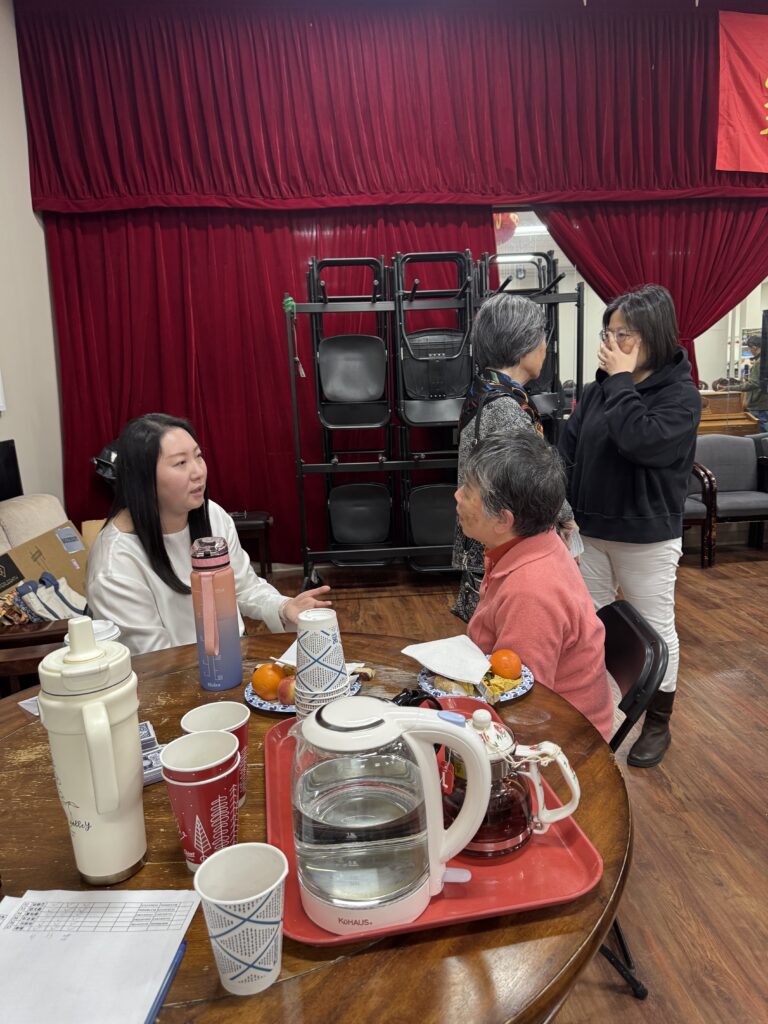
Dr. Han summarized brain-health strategies in three simple ideas: “keep your mind active, keep your body moving, and keep your social circle strong.” She encouraged everyone to start practicing these habits in daily life. Her clear and engaging presentation earned warm applause from the audience. After the lecture, Dr. Han patiently answered many questions from the seniors and stayed until 4 p.m. to provide further guidance.
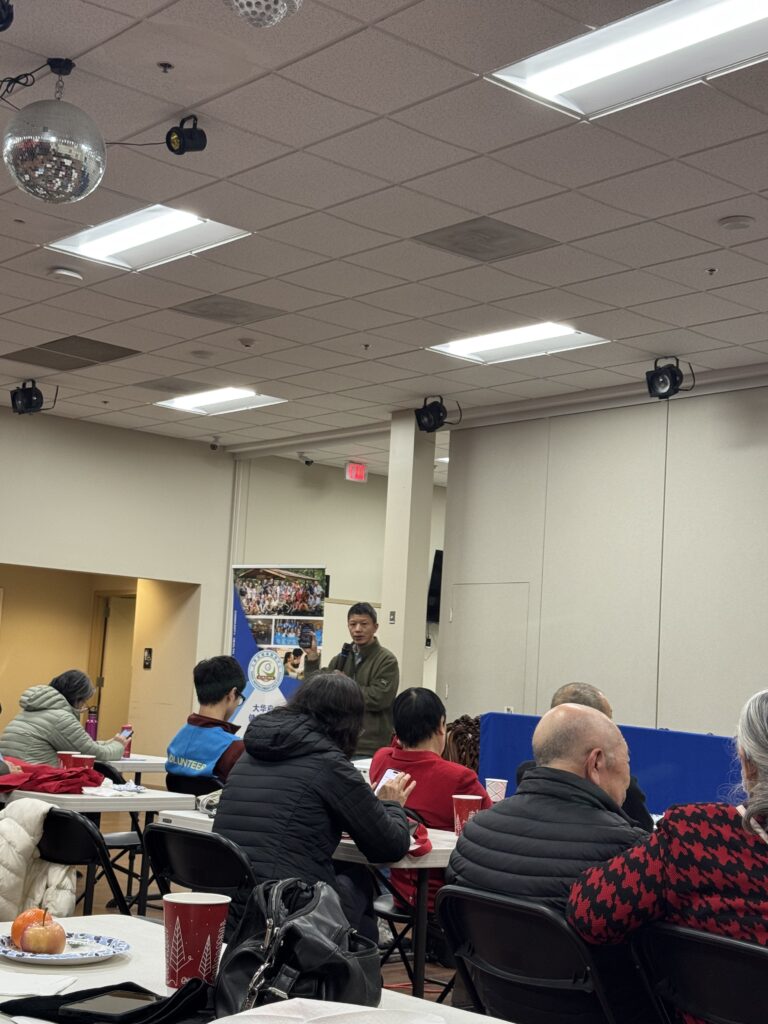
Following the health lecture, the seniors enjoyed a delicious afternoon tea together. Afterwards, Mr. Xiangyang Wei, a senior volunteer from the Chinese American Community Health Services, continued the session by introducing new smartphone features. He demonstrated practical skills such as using the phone’s search function effectively, performing quick image searches, and using the latest online translation tools. The seniors listened attentively and practiced with great enthusiasm.
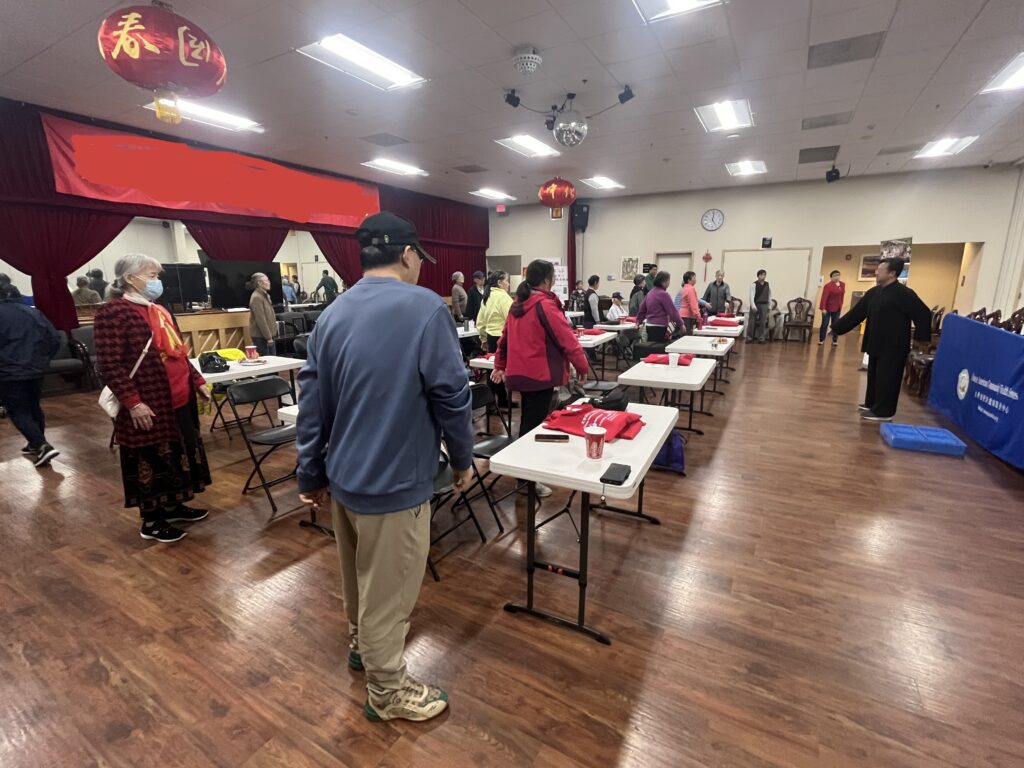
In the final segment of the program, community health advocate Li Hui demonstrated how to step onto stairs using the full foot to distribute weight properly, shared techniques for protecting the knee joints and preventing falls, and emphasized maintaining an upright walking posture with the spine aligned to avoid excessive pressure on the knees. Participants also practiced relaxation and strengthening exercises for the hip joints and surrounding muscles.
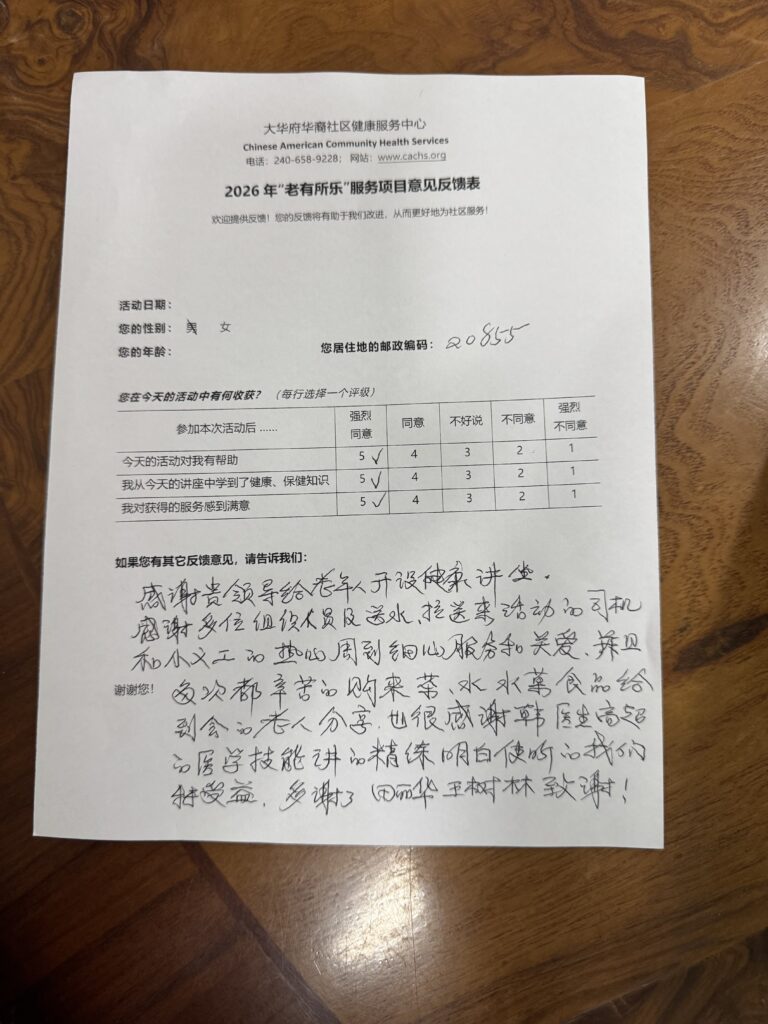
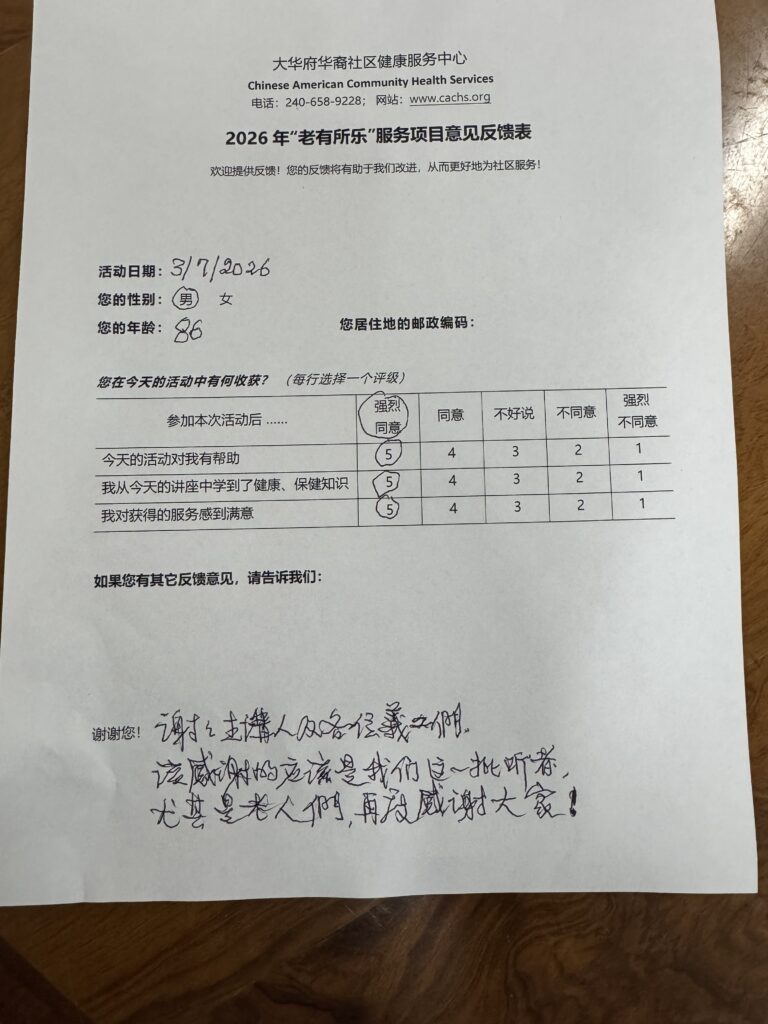
The three hours passed quickly. It was heartwarming to see the seniors arrive happily, participate enthusiastically, and leave with smiles on their faces—already looking forward to the next “Happy Seniors” gathering.