By Jennifer Zhang
Healthcare insurance is closely connected to our daily life. However, many seniors find it difficult to navigate the U.S. healthcare system due to unfamiliarity with its structure and details. As a result, visiting a doctor or even obtaining medications can be inconvenient and confusing.
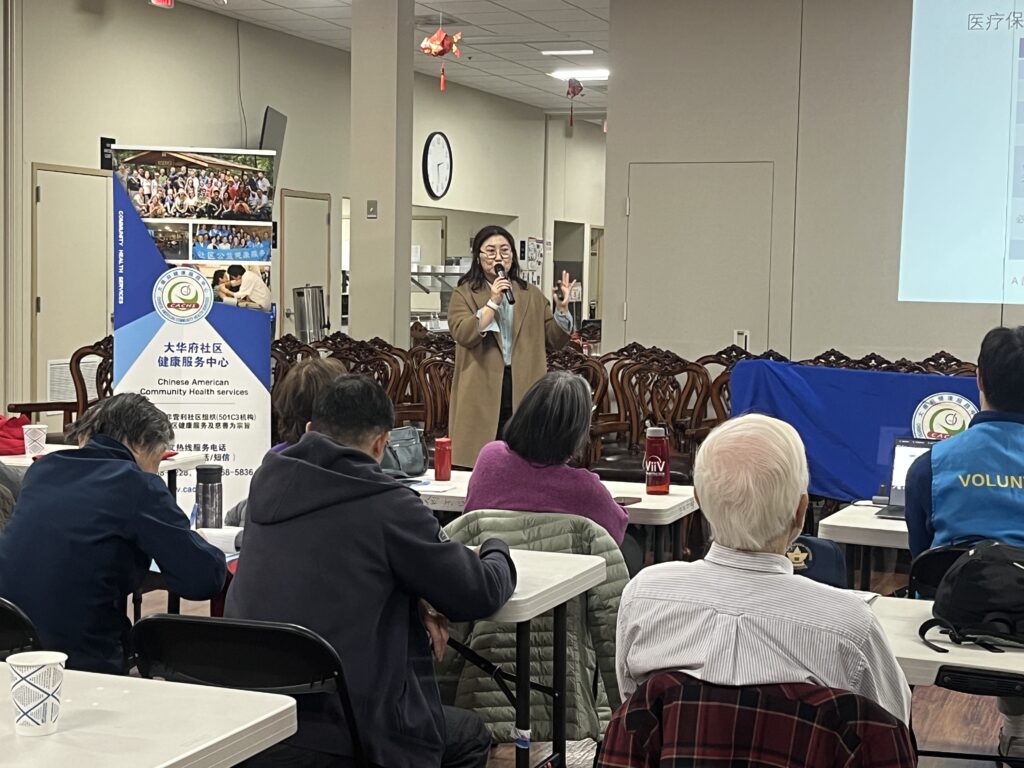
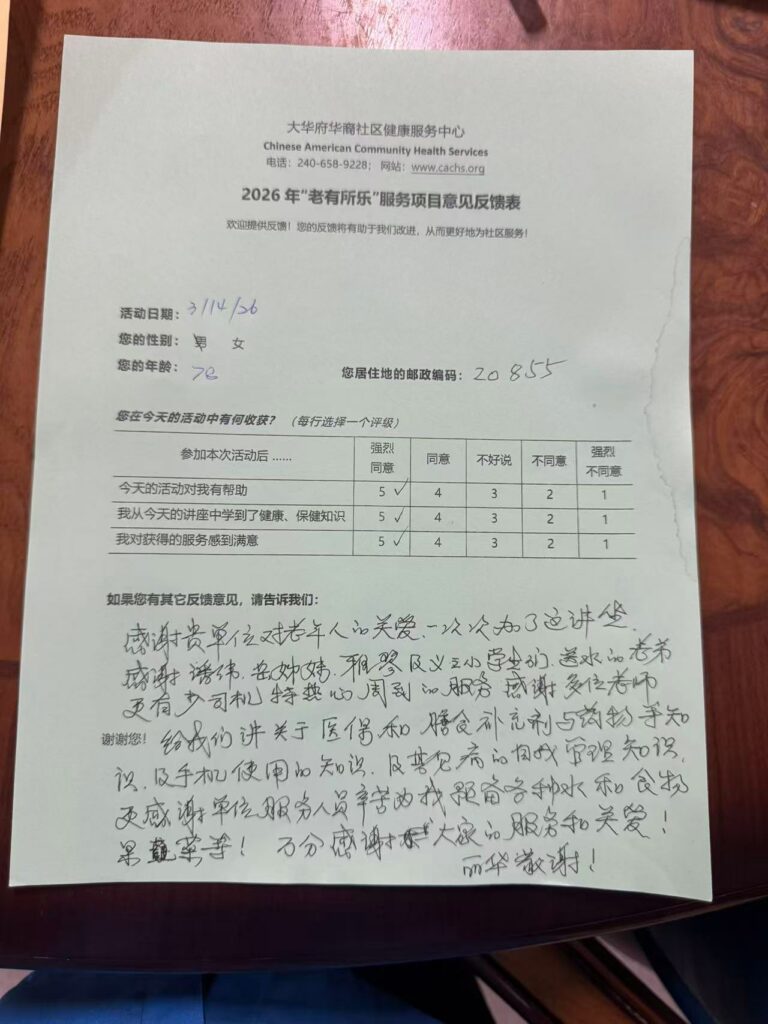
During the “Happy Seniors” event on the afternoon of March 14, we invited Mr. Peng Liuchang, a senior comprehensive financial planning expert in the Greater Washington area, to give an in-depth introduction to the U.S. healthcare insurance system. With extensive experience in the field and a long-standing commitment to community service, Miss. Peng is also a longtime friend of our Chinese American Community Health Services (CACHS).
Miss. Peng began by explaining the main types of health insurance in the United States and their eligibility requirements. She pointed out that individuals with a Social Security Number who are aged 65 and older are eligible to apply for federal health insurance, known as Medicare (commonly referred to as the “red and blue card”). Low-income individuals with a Social Security Number under the age of 65 may qualify for Medicaid (often called the “white card”).
She then provided an overview of the Affordable Care Act (ACA), also known as “Obamacare,” including eligibility criteria, enrollment periods, the calculation of Modified Adjusted Gross Income (MAGI), and the four common categories of insurance plans.
The focus of the lecture was on Medicare. Mr. Peng explained:
Part A (Hospital Insurance), including premium details for 2025 and 2026;
Part B (Medical Insurance), which covers visits to primary care physicians and specialists;
Part C (Medicare Advantage Plans), emphasizing how to make the most of these plans through real-life examples, including scheduling appointments and the importance of carrying insurance cards;
Medigap (Medicare Supplement Insurance), along with its advantages and disadvantages;
Part D (Prescription Drug Coverage), stressing the importance of enrolling in a drug plan and using it correctly.
To conclude, Miss. Peng reviewed and translated common health insurance terminology and further clarified key rules. Although the session lasted only one hour, it addressed many common challenges and knowledge gaps faced by seniors, and was warmly received. After the lecture, many participants gathered around Miss. Peng to ask additional questions, and she patiently answered each one until 4:30 PM.
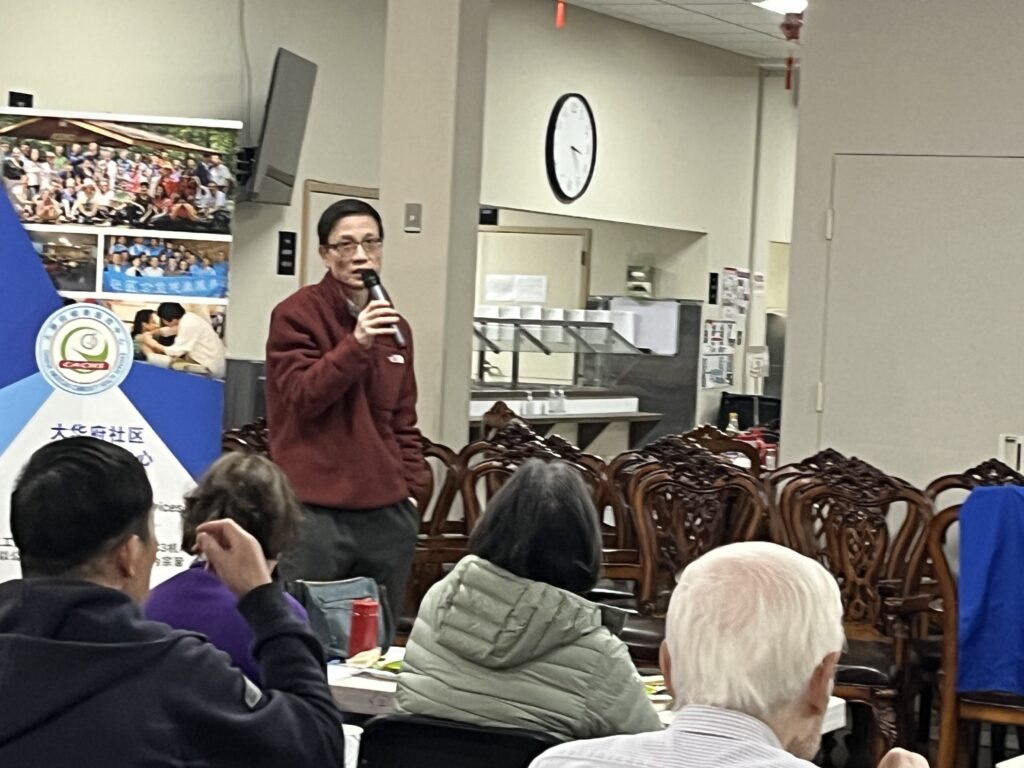
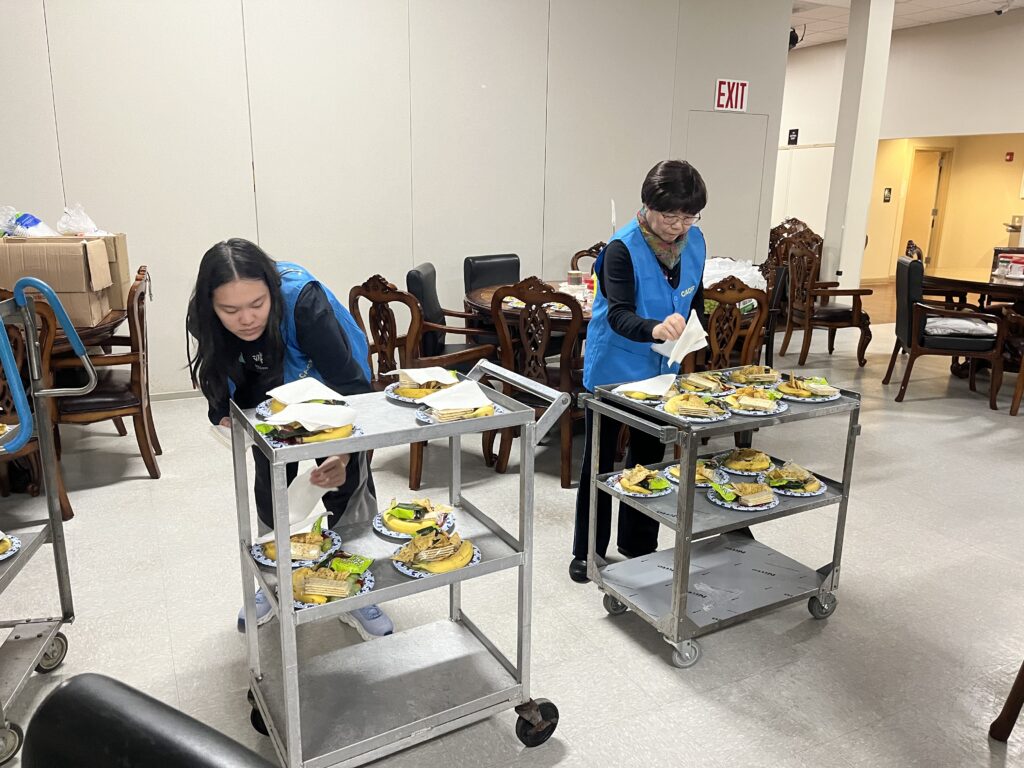
Following the lecture, participants enjoyed a delightful afternoon tea while attending two additional sessions. Dr. Xu Lixin, a senior volunteer at CACHS, gave a talk on “Dietary Supplements and Medications,” while Mr. Wei Xiangyang demonstrated practical tips for smartphone screen casting.
Dietary supplements—commonly known as health supplements—are widely used today. However, proper and safe usage, especially in combination with medications, is an important concern for seniors. Dr. Xu’s presentation was clear and accessible, covering:
The definitions and categories of dietary supplements and medications;
The differences between supplements and medications;
The benefits and precautions of using both supplements and medications;
Guidance on when to choose supplements versus medications.
Dr. Xu emphasized that it is crucial to understand the purpose of taking any supplement or medication and to ensure there are no harmful interactions. He also noted that the best way to manage chronic conditions is through lifestyle changes. Whenever possible, treating conditions through nutritional approaches is the safest and most effective path to recovery and long-term health. Since both supplements and medications are foreign substances to the body, they should only be used when necessary.
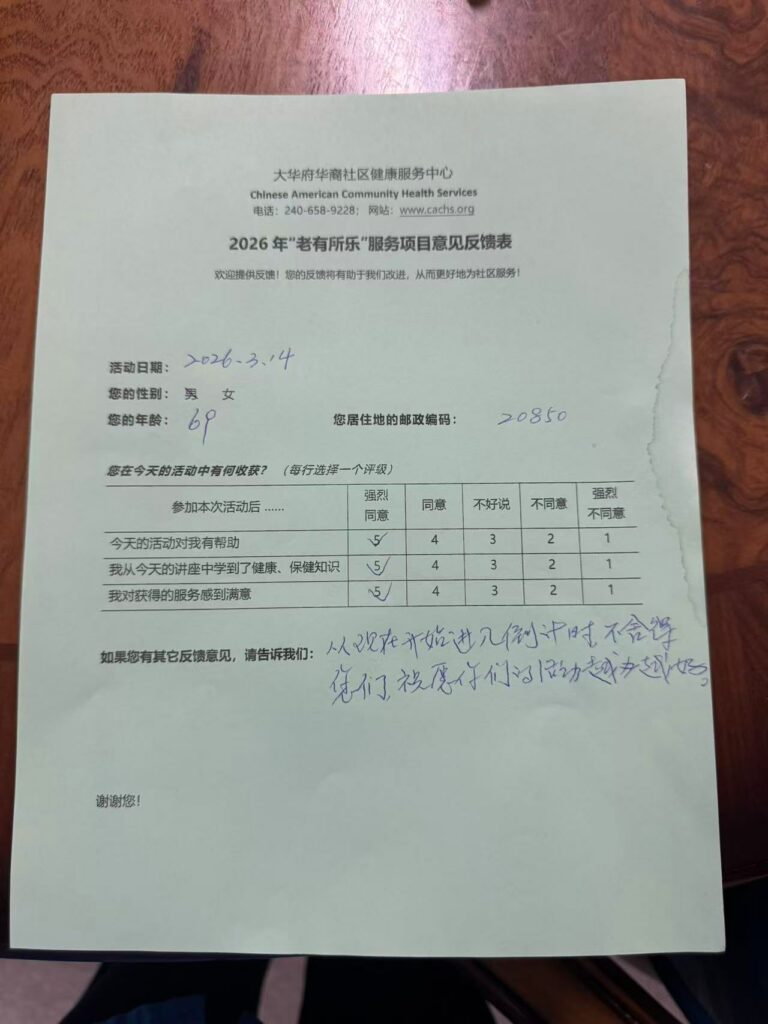
Health remains a top priority for everyone. The “Happy Seniors” in this week explored healthcare insurance, nutrition, and modern technology, helping seniors better understand and embrace a happy and healthy retirement life from multiple perspectives.
admin