“2026 Seniors’ Joy Program (Phase 1)” — Second Activity Brief
-
by
admin
By Jennifer Zhang
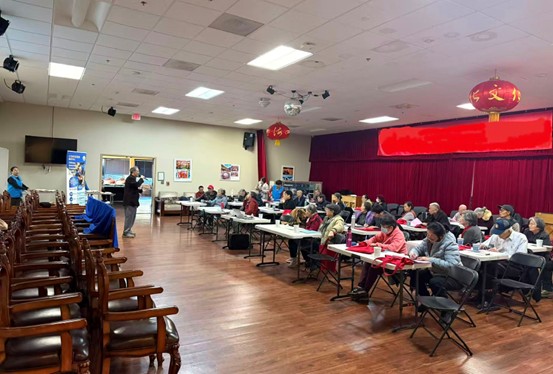
On January 17, light winter rain fell and the weather was bitterly cold. However, the chilly weather did nothing to dampen the seniors’ enthusiasm for participating in the “Happy Seniors”. Whether driving themselves or taking the shuttle buses hosted by the Chinese American Community Health Services (CACHS), the seniors arrived at the activity center on time and eagerly took part in activities on this Saturday afternoon.
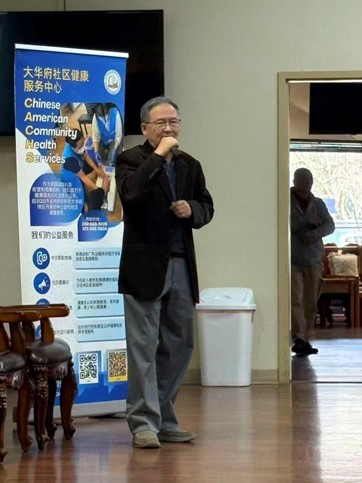
Today, CACHS was honored to invite Dr. Wu-Ping Chou to deliver a lecture titled “Perspectives and Myths of Cancer Screening.” Dr. Chou is a well-known family physician in the greater Washington, D.C. area with more than 40 years of clinical experience. In this lecture, he shared his unique insights and philosophy regarding cancer screening.
Among many diseases, cancer is often the most feared. Many people think it as an incurable and fatal illness. Coupled with the fact that cancer seems to be increasingly common among friends and families, it can feel as though cancer is everywhere, causing constant anxiety. But did you know that cancer-related deaths are actually decreasing year by year, and that more and more cancers can now be cured or effectively managed? Is there an age limit for cancer screening? Is it appropriate to undergo more tests—such as blood tests or full-body scans—in the hope of detecting cancer earlier? What principles should guide cancer screening? Are there differences in screening considerations among different racial or ethnic groups?
Drawing on his extensive clinical experience and professional perspective, Dr. Chou addressed these questions in detail and shared key concepts related to cancer screening.
First, he clearly pointed out that cancer is not becoming more prevalent overall. With the widespread adoption of early screening, new treatment options, and advanced medical technologies, cancer mortality rates have been steadily declining, albeit gradually. For example, colorectal cancer typically takes about ten years to develop from a polyp into cancer. With regular annual checkups, there is a high likelihood of detecting it early and receiving timely and effective treatment. Cancers most suitable for screening are generally slow-growing types, including colorectal cancer, breast cancer, prostate cancer (which has a relatively high rate of false positives), cervical cancer, and lung cancer. The recommended age range for screening is usually between 40 and 75 years. While the risk of cancer increases with age, it is even more important to consider one’s overall health and ability to tolerate specific screening procedures when deciding which tests to undergo.
In general, more screening can help with early detection and early treatment, but it is also essential to consider the issue of false positives and potential harms associated with certain tests, such as radiation exposure. Many cancers—such as liver cancer, breast cancer, gastric cancer, and lung cancer—are closely related to physiology, diet, and lifestyle, and their incidence and progression may vary among different ethnic groups. Although cancer cannot always be prevented, early detection and early treatment remain crucial. Dr. Chou offered professional advice, including having regular physical examinations, avoiding smoking, maintaining a healthy diet (such as eating more white meat and fewer preserved or grilled foods), keeping a healthy weight, engaging in moderate physical activity (about 7,000 steps per day), avoiding excessive sun exposure, and receiving necessary preventive vaccinations.
In closing, Dr. Chou emphasized that life is finite, and all examinations and treatments are intended to help people live with quality and dignity within the limits of life—this principle applies equally when facing cancer.
After the professional lecture, youth volunteers from the Capital Youth Outreach Club served the seniors carefully prepared pastries, fresh fruit, and fragrant hot tea. Following the enjoyable afternoon tea, CACHS volunteers led everyone in a 20-minute senior fitness exercise session accompanied by cheerful music.
After the break, photography enthusiast Hong Sun taught the seniors how to take photos using their smartphones and explained various practical mobile photography techniques. In particular, demonstrations on using AI to create videos allowed the seniors to experience firsthand the power of modern technology and the convenience it brings to everyday life.